

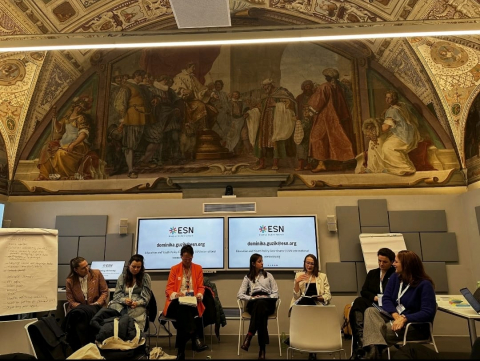
In the week of 20–21 November, EUC Voices was represented at the 1st European Degree Forum 2025 in Florence. Thanks to the contribution of a former European Student Assembly (ESA) participant – Annika Breuer – the project was able to bring student perspectives to discussions involving academics, policymakers and practitioners from across Europe.
Annika Breuer at the 1st European Degree Forum – Florence
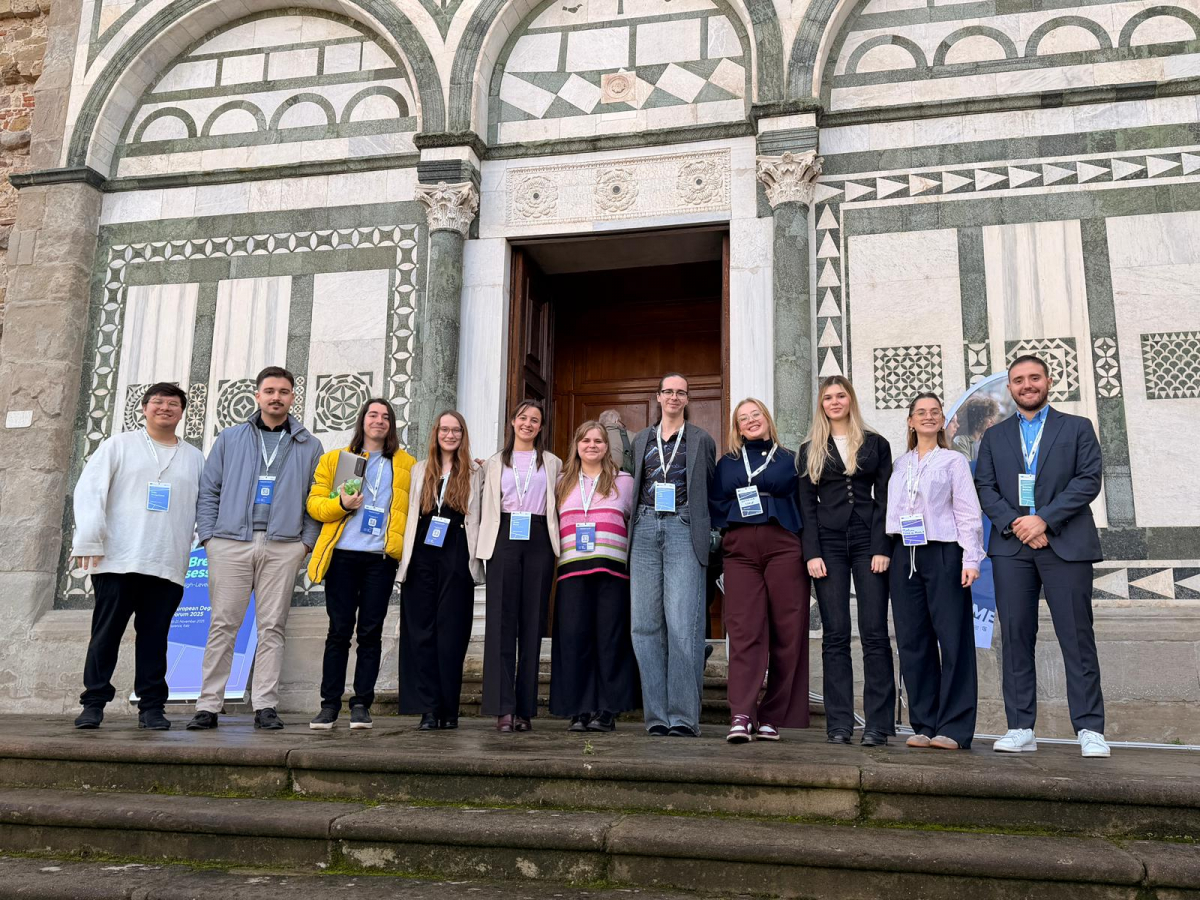
Former ESA participant Annika Breuer attended the European Degree Forum in Florence to represent EUC Voices and contribute to the drafting of the European Degree Pledge.
Here is her account of the experience:
I recently attended the 1st European Degree Forum 2025, held on 20–21 November at the European University Institute in Florence. I took part in the event to represent the EUC Voices project, drawing on my experience as a former ESA participant.
I didn’t give a specific intervention, but I actively participated in the break-out sessions to discuss challenges and solutions in order to draft the European Degree Pledge.
Representatives of the European academic community met in Florence for this first edition, organised by the European Commission, with the aim of designing guidelines for European degrees. It was an engaging and intensive event, with working sessions focused on identifying challenges and proposing practical solutions.
Building on recommendations from ESA#2023 and ESA#2024 on higher education, I brought the student perspective into the discussions alongside fellow students from ESN, ESU and ForEU4All. This will help ensure that future European Degrees are accessible and valuable to students.
Strengthening student-led engagement across Europe
This contribution reaffirms the added value of involving ESA alumni in European-level events. Their insights and presence help keep student voices central to conversations about the future of European higher education, mobility and civic participation.
EUC Voices will continue to engage young people in dialogue spaces across Europe, promoting visibility for ESA outcomes and strengthening bridges between youth-led recommendations and institutional stakeholders.